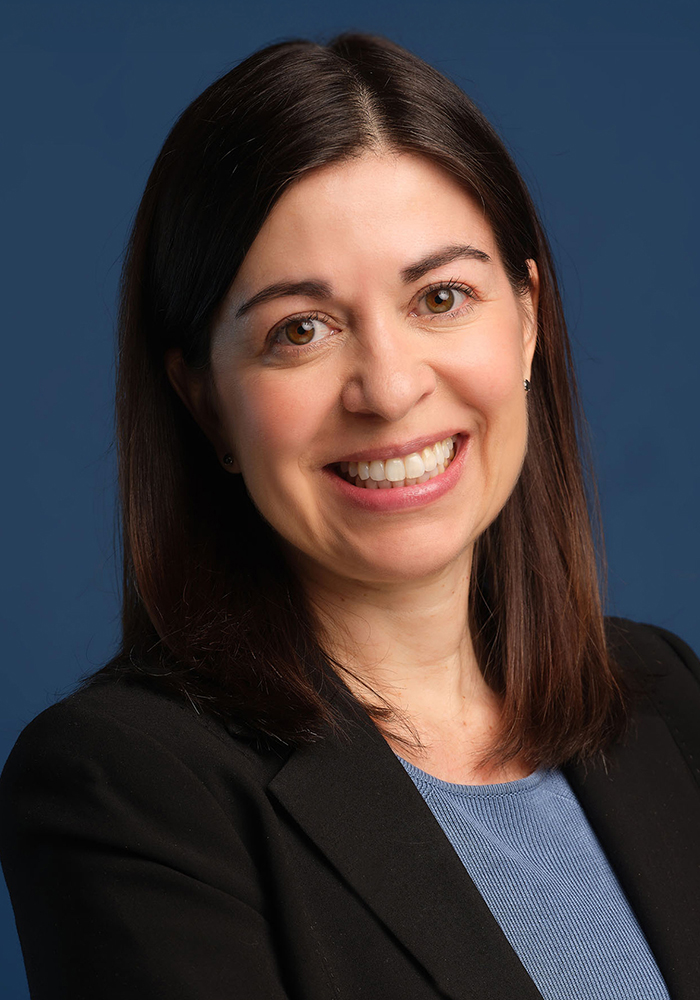
Christine Dunn is Co-Managing Partner of Sanford Heisler Sharp McKnight's Washington, D.C. office and Co-Chair of the firm's Sexual Violence, Title IX, and Victims' Rights Practice Group. A nationally recognized plaintiffs' attorney, she represents survivors of sexual assault, discrimination, and whistleblower retaliation, with her work featured in The New York Times, The Washington Post, and People magazine.
Christine has received numerous honors, including The National Law Journal's Elite Women of the Plaintiffs Bar and Lawyer Monthly's Sexual Violence Litigation Lawyer of the Year. A former federal civil rights prosecutor, she holds a J.D. from the University of Virginia and a B.A. from Yale University.
You've built a distinguished career advocating for survivors of sexual violence. What initially drew you into this field, and what continues to inspire your dedication to such difficult and important cases?
I attended a Quaker school from 7th through 12th grades. Although I'm not Quaker, I was very influenced by the emphasis that Quakers place on public service and fighting against injustice. Looking back, I realize that those values heavily impacted my career trajectory. Before joining my current law firm, I spent many years working as a civil rights prosecutor at the Department of Justice. Most of the cases I prosecuted involved police misconduct, including several cases where a law enforcement officer committed sexual assault. As a prosecutor, I spent countless hours working with sexual assault survivors. I developed a passion for helping survivors get justice. After leaving the Department of Justice, I joined my current law firm, Sanford Heisler Sharp McKnight, a civil rights and social justice firm where I co-chair our Sexual Violence, Title IX and Victims' Rights practice group. In this role, I still help victims of crime obtain justice, but on the civil side, rather than the criminal side.
In many ways I find being a civil attorney for crime victims to be even more rewarding than my work as a prosecutor. On the criminal side, the victim is not a party. Instead, it is the government vs. the perpetrator. The victim has certain rights in a criminal case, e.g., the right to be notified of important events, the right to be heard at sentencing, etc.; however, the victim does not get to call the shots. That's different than a civil case. In a civil action, the survivor initiates the case and gets to make the decisions – in consultation with their lawyer – about how to proceed. That can be very empowering for a survivor. Sexual assault survivors routinely tell me that one of the worst parts of being victimized is feeling like they have lost their power. Bringing a civil lawsuit, where they get to make the decisions, can help survivors feel like they are regaining some of their power. Empowering survivors and helping them to get justice is the most rewarding part of my work.
Have there been pivotal moments in your career when advocating for survivors posed unique professional or personal challenges and how did you overcome them?
Working on behalf of sexual assault survivors does pose unique personal and professional challenges. Professionally, there are a lot of legal roadblocks that make it hard to pursue these cases. One of the biggest legal challenges is that statutes of limitations – time limits in which you have to bring a legal claim – are often very short. This is at odds with the reality that sexual assault survivors routinely delay coming forward. It's heartbreaking when a sexual assault survivor is finally able to come forward to seek accountability, only to realize that the statute of limitations has expired. When this has happened, I've worked hard to think creatively about arguments to try to get around the statute of limitations. For example, is there a way to argue that the survivor didn't discover the abuse until a later date? Fortunately, this challenge is decreasing as more states pass longer statutes of limitations for sexual assault, especially sexual assault experienced by children.
Another legal challenge I routinely face involves my work on behalf of military sexual assault survivors. In 1950, the Supreme Court decided a case called Feres v. United States, which held that active duty servicemembers cannot bring tort claims against the government for anything "incident to military service". Unfortunately, over the years, this has been interpreted so broadly that military members are essentially barred from bringing any claims, even ones that seemingly have nothing to do with military service. The Feres doctrine has even been used to prevent servicemembers from bringing claims when they have been sexually assaulted. It blows my mind that being raped could ever be seen as incident to anyone's military service. Trying to navigate around the Feres doctrine is difficult. Fortunately, there have been some recent cracks in the law with respect to military sexual assault claims. I represent a number of military sexual assault survivors, and I'm working hard to exploit those cracks in the law and push back on the Feres doctrine. I firmly believe that the only way to change the law is to be willing to fight the hard fights.
Doing this work is also personally challenging. I have a teenage daughter who is the light of my life. I constantly get calls about cases involving teenage girls being sexually assaulted. It's hard not to think of my own daughter when I hear these stories. As a mom, it's really tempting to keep my daughter safe by wrapping her in bubble wrap and never letting her out of the house. But I don't want her to grow up scared, so I have always approached parenting with a "knowledge is power" philosophy. From the time she was young, I've talked openly to her about the risks and dangers of sexual assault. I know there are no guarantees in life, but I hope that giving her the information can help to keep her safer.
Many of your cases have contributed to broader awareness and even shifts in workplace or institutional policies. Could you share an example of a case where the impact extended beyond your client to effect systemic change?
A big reason I became a lawyer is because I believe that the law is a powerful vehicle for creating institutional change. Most of the cases I bring are against large institutions (like schools, companies, hospitals, or churches) that have failed to keep their members reasonably safe from sexual violence. Over the years I have learned that, if you keep bringing legal claims against institutions, they have no choice but to make changes and do better, if only to avoid being sued again.
Several years ago, I represented a young woman who was a student at the U.S. Merchant Marine Academy (USMMA). Because USMMA students graduate with a commercial shipping license, they are required to spend a certain amount of time working on commercial ships as part of the "Sea Year" program. During my client's Sea Year, she was raped by her supervisor aboard the ship. Because she was terrified of retaliation, she didn't report the rape and suffered in silence for two more months on the ship – living in the room next door to her rapist.
When she returned to campus, she began to understand how widespread the problem of maritime sexual assault is. Eventually, she wrote an anonymous blog post about her experience. Much to her surprise, the blog post went viral and caused a tsunami of outrage in the maritime industry, leading to Congressional investigations and a temporary suspension of the Sea Year program. The day that we filed a lawsuit on her behalf, her story was one of the top stories on CNN. Ultimately, as a result of the extensive media attention her story and lawsuit received, Congress passed portions of the Safer Seas Act, mandating concrete changes on commercial ships. These changes include requirements for cameras outside of staterooms and increased fines against shipping companies that fail to report sexual assault to law enforcement. All these changes are aimed at keeping mariners safer from sexual assault. My client's willingness to speak out about her horrific experience is the most direct example I've ever seen of one survivor's bravery creating systemic change that has the power to make future generations safer. Just recently, I was at a conference and the presenter had a slide picturing my client as a model of how one person can create substantive change. I was proud to stand with my client in helping her to have a profound impact on the maritime industry.
Legal work of this nature can be emotionally taxing. What strategies or routines do you rely on to maintain perspective and avoid burnout while still giving clients the compassion they deserve?
Representing sexual assault survivors is emotionally gruelling. Vicarious trauma is very real for anyone who does this work. I spend every workday listening to potential and current clients tell me about horrific, gut-wrenching experiences. I regularly have friends ask me, "how can you do this work, isn't it too hard?" The answer is, yes, it is very hard but it's also incredibly rewarding. In the hardest moments, it helps to remind myself why I do this work. A few years ago, I had a client tell me that, since she had retained my firm two months earlier, it was the first time she had smiled in the four years since she was raped because she finally had someone to fight for her. Knowing that I can make that kind of a difference in a survivor's life is what keeps me going.
For anyone who does this work, it's also very important to find some outlet that allows you to step away from the sadness. Maybe that's yoga or taking long walks or meditation – whatever helps you unwind and regroup. My friends tease me for having terrible taste in TV shows. I always explain that what I do for a living is very emotionally heavy and watching trashy TV is my way of escaping the heaviness for a little while.
Looking ahead, what changes in legislation, policy, or courtroom practice would you most like to see to strengthen protections for survivors and hold perpetrators accountable?
A change that could benefit sexual assault survivors navigating the legal process is a greater emphasis on trauma-informed interactions. Unfortunately, crime victims, especially sexual assault survivors, are often treated very poorly in our legal system. Over the years, I have encountered defense attorneys, mediators, and even judges who engage in victim blaming and shaming in sexual assault cases. As the co-chair of my firm's Sexual Violence, Title IX and Victims' Rights practice group it is incredibly important to me that everyone who does this work at my firm is trauma informed. I want every survivor who comes into contact with my firm to be treated with dignity and respect.
A few years ago, one of my Legal Assistants did an intake with a potential client. Later, when I followed up with the potential client, she said "I have been talking to lots of firms but after speaking to your Legal Assistant, I only want to work with your firm because she was so kind and empathetic." I loved hearing that and it made me feel like I had succeeded in prioritizing a trauma-centered approach at my firm. When I was in law school, no one talked about being trauma informed. I think that is slowly starting to change. Recently, I was speaking to a colleague who told me she is teaching a law school class on how to be a trauma informed lawyer. I think a class like that should be required for every law student. Emphasizing the importance of approaching crime victims with empathy and dignity, at the start of every lawyer's legal career, could go a long way towards changing how victims are treated by our legal system.
Another important change that would improve the legal landscape for sexual assault survivors is longer statutes of limitations. In our legal system, there are strict time limits in which you must bring a claim. If you do not bring your legal claim within the statute of limitations, you have likely forfeited your ability to proceed. Often those time limits are very short. Anyone who does this work knows that it frequently takes a very long time for a sexual assault survivor to disclose the assault. There are lots of reasons a survivor might delay coming forward, like the fear of not being believed, of stigmatization, and retaliation from the perpetrator or their community. I often quote the statistic that the average age for a childhood sexual assault survivor to disclose the abuse is 52. That's the reality – sexual assault and abuse survivors may need decades to feel strong enough to speak about their trauma. Many states have started passing laws that extend the statute of limitations for sexual assault. Some states have passed "lookback windows", where for a period of time – maybe a one-, two- or three-year window, sometimes a permanent window –a survivor of childhood sexual abuse can assert a legal claim, regardless of how long ago the abuse occurred. Going forward, I hope to see more states extending their statutes of limitations and passing "lookback windows" for both child and adult victims.
On a broader note, what advice would you give to young lawyers who want to pursue careers in socially impactful litigation, especially in fields as sensitive as sexual violence?
I think the best advice I could give a young lawyer is to find something you're passionate about. Being a lawyer is hard, but it's made easier when you care deeply about your cases. That's how I feel about my work. I care deeply about my clients and about helping them to obtain justice. That motivation gets me out of bed in the morning and carries me through even the hardest days. I would also advise young lawyers who want to do this work to find a professional home with likeminded individuals who care as much as you do. I am grateful to work at a civil rights and social justice firm. Not everyone at my firm works on sexual violence cases but all the cases at my firm involve representing the Davids against the Goliaths and seeking justice for the less powerful against the most powerful. When I first joined my firm, I quickly recognized kindred spirits that cared about making the world a better place. Being surrounded by that kind of energy every day is inspiring.