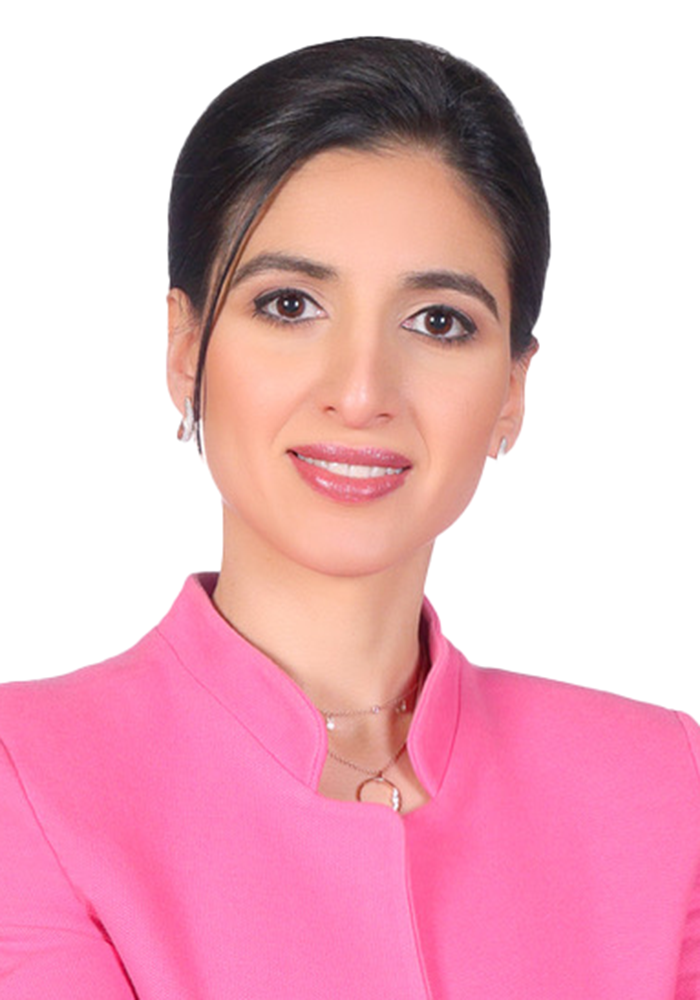
With 21 years of experience at the Bar of Brussels, Sevda Karsikaya has built a career that combines legal expertise with a deep commitment to accessibility and human rights. She is best known for her work in family law, but her expertise also extends to immigration, juvenile law, criminal law, and human rights, where she has achieved successes before the European Court of Human Rights. She pleads cases in both Dutch and French, in courts across Belgium. Beyond the courtroom, she leads projects such as DIApositief and Advocaat op school, appears regularly on Turkish television to explain the Belgian legal system, and authored a handbook about their rights in familiy and criminal law for Turkish women in Belgium. Her recognition as winner in the category Family Law is a tribute to her dedication to making justice both accessible and humane.
Why did you decide to become a lawyer?
From an early age, I knew I wanted to work with law. Not because I was fascinated by dry legal texts, but because I wanted to help people in vulnerable situations. For me, being a lawyer has never been just a technical profession, but a calling. When I started at the bar, I quickly realized that family law appealed to me most. It touches the very core of people's lives: families, relationships, children. It is a field full of emotions, but at the same time a place where the law can truly protect people.
What makes family law so unique?
Family law goes far beyond rules and procedures. A divorce, child custody arrangements, or the recognition of a child—these are events that deeply affect people. As a lawyer, you are right in the middle of that storm. Your role is more than litigating; you have to listen, guide, and sometimes de-escalate. It's about finding solutions that are not only legally correct but also humanly sustainable.
You were also a certified mediator in family, civil and commercial matters. What attracted you to that work?
Mediation gives parties the chance to take responsibility themselves. A judge can impose a decision, but that rarely reflects everyone's emotions or expectations. Especially in families, where parents often remain connected through their children for life, dialogue is essential. Time and again I saw how mediation could defuse conflicts and pave the way for respectful agreements.
Your engagement goes beyond the courtroom. You also served within the Bar. How important was that to you?
Very important. From 2014 to 2017, I was a member of the Council of the Dutch Bar of Brussels. Within the Flemish Bar Association, I worked on committees for quality assurance, family law, criminal law, and immigration law. The quality assurance committee focuses on safeguarding professional standards within the legal profession. For me, it was a way to help strengthen the profession and ensure that justice remains accessible to everyone.
You also play an active role in the Bureau for Legal Aid. What does that mean to you?
The Bureau for Legal Aid ensures that people who cannot afford a lawyer still receive legal assistance. I served as deputy chair in the immigration section and, since 2017, I have been Section Head of the Legal Aid Bureau of the Bar of Brussels . I am also active in the junevile law, criminal law, and family law sections. For me, it all comes down to the same principle: justice should never be a privilege.
You also served for many years as legal adviser to the Consulate General of Türkiye in Brussels. What did that role involve?
That was a particularly enriching period. I advised the Consulate and citizens in cases that often had to bridge Belgian and Turkish law: from family law and the recognition of judgments to residence procedures and criminal law. Many people felt lost between two legal systems. My role was to bring clarity and help find workable solutions. Sometimes these were very personal situations, such as parents unsure how a foreign decision about their children could be applied here. Guiding them step by step through that complexity was very rewarding. In a diverse city like Brussels, it was a natural and valuable complement to my practice.
You are also involved in projects such as DIApositief and Advocaat op school. What do these entail?
With DIApositief we aim to make the legal profession more diverse and inclusive. The project is specifically aimed at young people with a migration background in their final year of secondary school. As director of this project at the Brussels Bar, I design an annual program in which students are introduced to the various actors in the justice system. At the end of the program, they each solve an individual case study that I prepare. The winner receives a scholarship, funded by the Dutch Bar of Brussels, to support them throughout their law studies. For many, this is their very first real encounter with the justice system. I often see that it motivates them to study law and to consider a career in the legal profession. In addition, I am responsible for Lawyer in the School, a project in which lawyers give lessons in schools to inform young people about their rights, duties, and the role of justice.
You also regularly appear in the media. What does that involve?
I am often invited on Turkish television to explain the Belgian legal system, in various areas of law. These appearances are usually live, allowing me to provide direct commentary on current issues. My role is to make complex legal matters understandable for a broad audience, often for people with ties to both Belgium and Turkey. For me, this is an extension of my daily work: making law accessible and lowering barriers so that more people understand how justice in Belgium functions.
You also followed training abroad, in Vienna, Ankara, Istanbul, and Strasbourg. What did that bring you?
It allowed me to guide clients better in cross-border cases. I followed training in Turkish and European family law, the association agreements between Turkey and the EU, and the recognition of foreign judgments. In Brussels, international cases are very common, and that expertise is crucial. Law does not stop at the border, and anyone working in Brussels knows that better than most.
You not only followed training in Strasbourg and other European countries, but also taught there yourself. What subjects did you cover, and what did you take away from that experience?
It was a special experience to share my expertise in that context. I taught courses on immigration law and on the association agreement between Turkey and the European Union. For me, it was not only an opportunity to pass on knowledge, but also to engage in dialogue with professionals from different countries. It once again underlined how important international cooperation is—especially in a city like Brussels, where cases often touch upon multiple legal systems.
In 2013, you also wrote a handbook in Turkish for Turkish women in Belgium. What was the reason?
I saw that many women lacked clear information in their own language. That is why I wrote Belçika'daki Türk kadinlari için el kitapçigi, a handbook with practical explanations about family reunification, family law, and domestic violence. It was published by the Turkish Ministry of Family and Social Affairs. The aim was simple: to give women the knowledge to understand and defend their rights. I received many reactions from women who said the handbook helped them feel stronger and more confident. For me, that was the greatest reward.
You also achieved results at the European Court of Human Rights. How do you look back on that?
With pride. The judgments Tekin et Arslan v. Belgium (2017) and Kaya v. Belgium (2019) were important not only for the clients involved, but also for the development of Belgian case law. The moment you hear in Strasbourg that the Court accepts your arguments is unforgettable. For my clients, it meant justice; for me, it was confirmation that perseverance pays off. These judgments also show that even a strong rule of law must remain vigilant in safeguarding fundamental rights.
What do you see as the biggest challenge for family law in Belgium?
The need for speed, humanity, and dialogue. Procedures are often too long and too burdensome for families. I believe mediation will become increasingly central, because it allows parties to take responsibility themselves. Justice must come closer to people—that is the challenge for lawyers, judges, and policymakers alike.
You were recently awarded as winner in family law. What does this recognition mean to you?
It is an honor, but above all a stimulus. For me, it is not an endpoint, but a motivation to continue. It confirms that my efforts make a difference, for clients and for society. Justice is never complete.
What gives you the greatest satisfaction in your work?
The people themselves. When a client regains perspective, when a conflict is resolved, or when someone finally feels heard, I know why I chose this profession. Being a lawyer is intense and demanding, but also incredibly rewarding.